
Sleep Apnea Oral Appliances
What Are Sleep Apnea Oral Appliances?
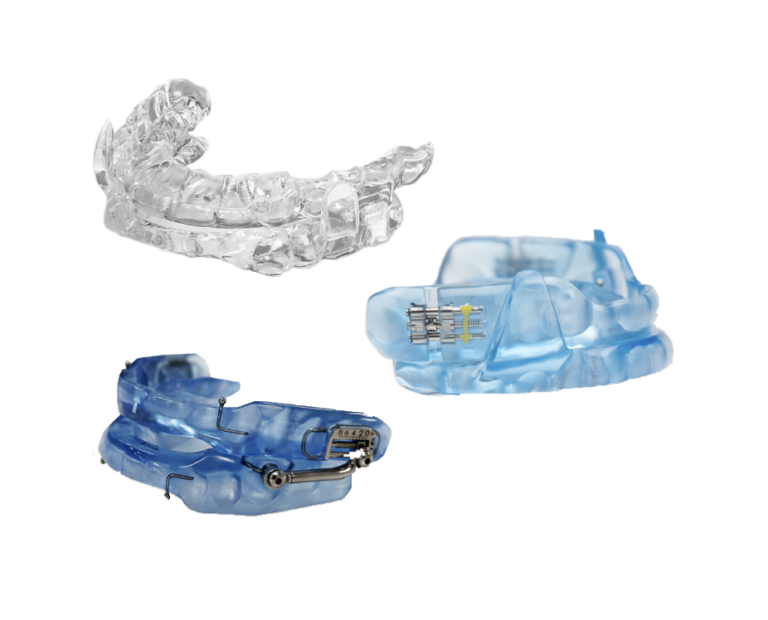
Sleep apnea oral appliances, also known as Mandibular Advancement Devices (MAD), are custom-fitted, removable dental devices worn only while sleeping. The appliance gently holds your lower jaw in a slightly forward position. This shifts the tongue and soft throat tissues forward to prevent airway collapse, which is the main cause of snoring and breathing interruptions during sleep.
Unlike generic over-the-counter boil-and-bite devices, our appliances are fabricated from digital scans of your teeth for a precise, comfortable fit. Most models are adjustable, so your dentist can fine-tune jaw positioning over time to achieve optimal results. A less common alternative is the Tongue Retaining Device (TRD), which holds the tongue forward directly instead of repositioning the jaw.
Oral Appliance Treatment Procedure
1. Consultation & Medical Review
We review your sleep study results from a sleep specialist, complete a full dental exam, check your jaw joints, bite and airway. We confirm whether oral appliance therapy is appropriate for your condition.
1. Consultation & Medical Review
We review your sleep study results from a sleep specialist, complete a full dental exam, check your jaw joints, bite and airway. We confirm whether oral appliance therapy is appropriate for your condition.
2. Digital Scanning & Bite Registration
Intraoral digital scans capture the exact shape of your upper and lower teeth. We take a precise bite recording to determine the safe, effective forward position of your lower jaw. The scan data is sent to a specialized dental lab.
3. Appliance Fabrication
We review your sleep study results from a sleep specialist, complete a full dental exam, check your jaw joints, bite and airway. We confirm whether oral appliance therapy is appropriate for your condition.
4. Delivery, Fitting & Titration
At your delivery visit, we fit the appliance, test comfort and make initial adjustments. Over follow-up appointments, we gradually advance the jaw position (titration) to reduce snoring and apnea while minimizing jaw strain. A follow-up sleep study may be arranged to verify treatment effectiveness.
5. Long-term Monitoring
We schedule periodic dental check-ups to inspect your appliance, check your bite, TMJ health and track your sleep symptoms.
Key Benefits of Sleep Apnea Oral Appliances
- Quiet, portable and easy to travel with; no power supply required
- No bulky mask, air tubing or noise compared with CPAP
- Reduces snoring, breathing pauses and nighttime awakenings
- Improves daytime energy, focus and reduces morning headaches
- Non-surgical, reversible treatment worn only during sleep
- Compact and simple to clean and maintain
- May lower long-term health risks linked to untreated sleep apnea, such as high blood pressure